

Welcome to The Antifragile Academy blog, where we’ll share education and updates on all things antifragiity.
What Is Psychological Richness, and Is It Different From Happiness?
Sixteen years after the 1995 Kobe earthquake, survivors who had lost their homes were still less satisfied with life and still reporting more physical symptoms. Many of the same people also said the earthquake had changed how they saw the world and raised their faith in other people. Both things were true at once, but the second one had no name in the research at the time. It does now and we refer to it as psychological richness.
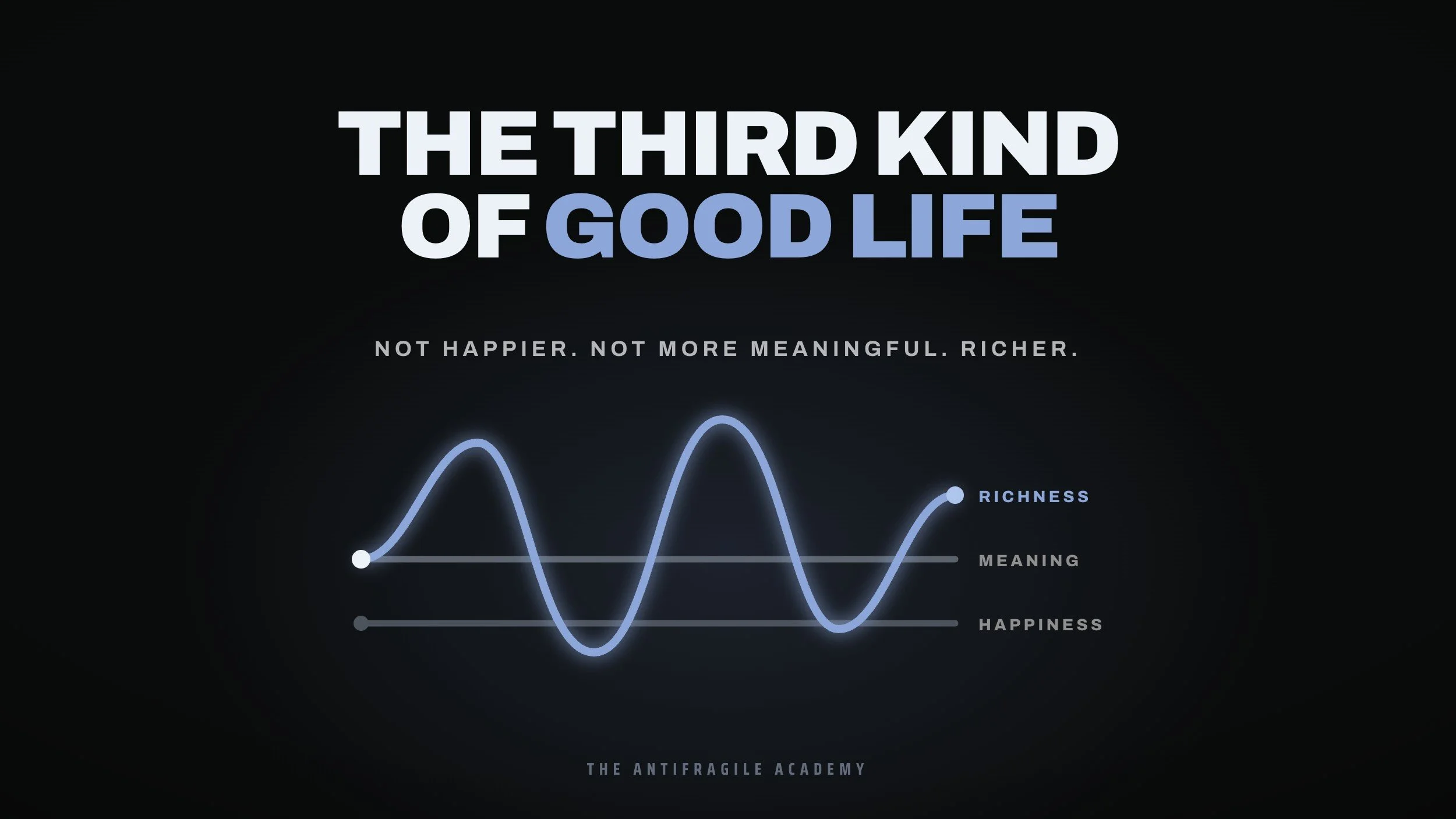
Psychological richness is the third kind of good life: not the happy one, not the meaningful one, but the one filled with diverse, interesting, and perspective-changing experiences. It is distinct from happiness and meaning, and it is the dimension of flourishing that difficulty builds most directly.
Psychological richness is a life characterized by variety, novelty, and shifts in perspective. Shigehiro Oishi of the University of Chicago and Erin Westgate proposed it in a 2022 paper in Psychological Review as a third answer to the question positive psychology has been asking since the 1980s (and other fields well before that): what is a good life?
Is Antifragility the Goal, or just a pathway?
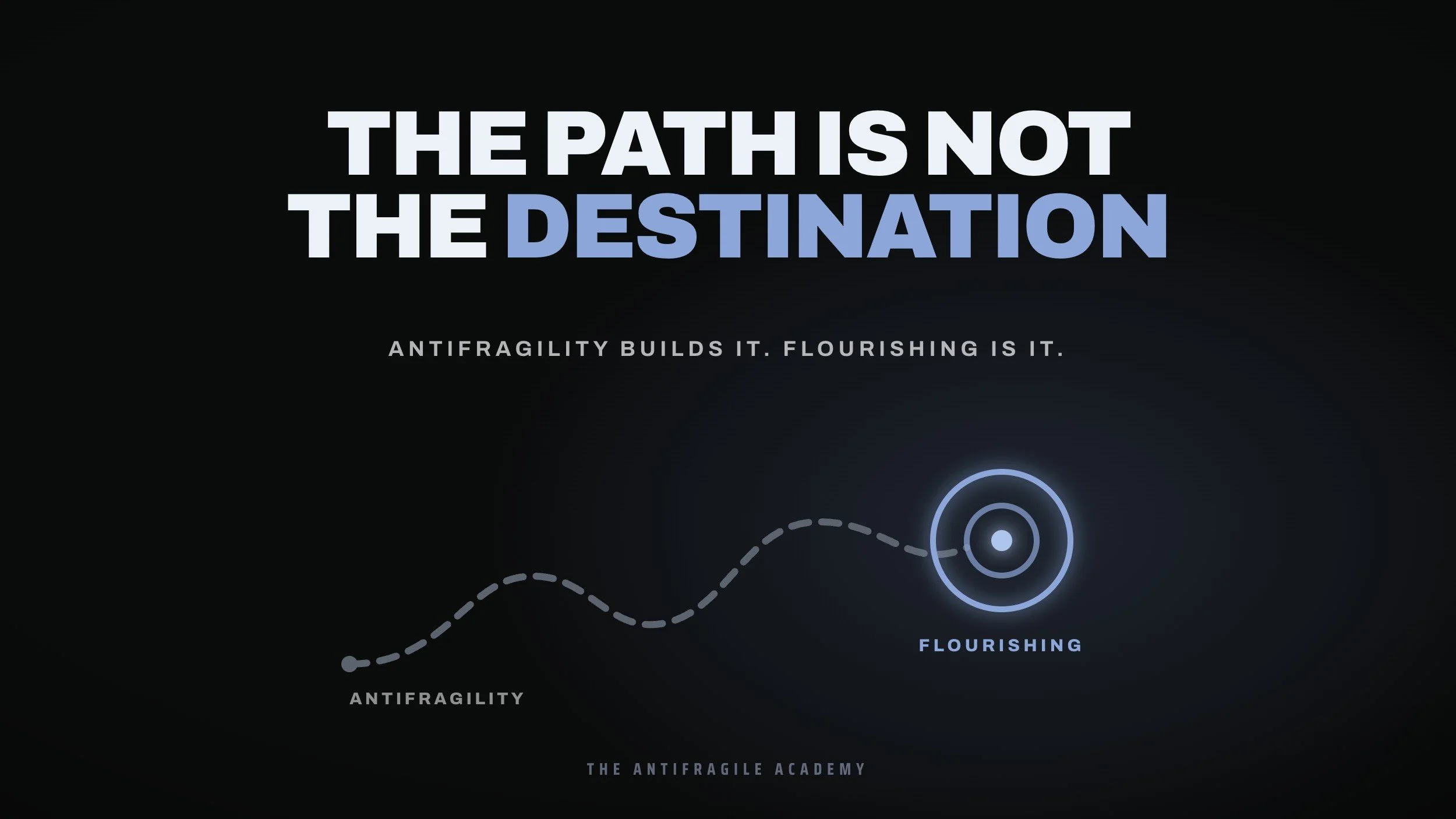
Because the goal sets the dose. If antifragility is the point, more challenge is always better, and the logical endpoint is a person who manufactures hardship for its own sake. Grind culture is what that looks like at scale. If flourishing is the point, challenge is a tool, and the right question becomes: is this difficulty building a domain of my flourishing, or just wearing me down?
Does Stress Mindset Training Work? What the 2026 Evidence Actually Shows
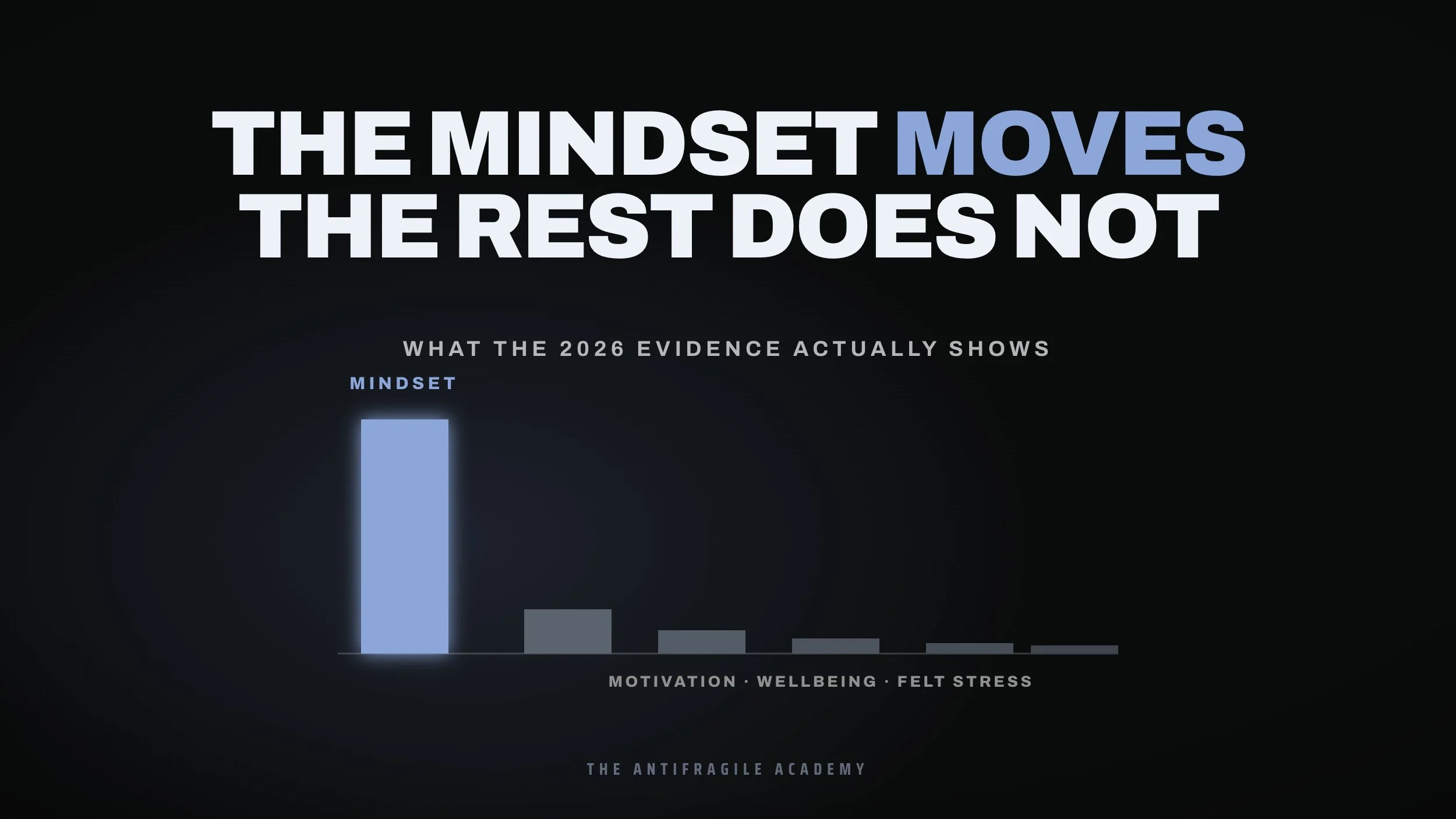
A few classroom sessions can measurably change how a 12-year-old thinks about stress. Whether that change improves anything else is a different question. Stress mindset training works at changing the mindset itself: a 2026 randomized trial moved adolescents' stress-is-enhancing mindset by nearly half a standard deviation. The evidence that the shift then improves motivation, wellbeing, or felt stress is much weaker, and anyone selling mindset training as a full solution is running ahead of the data.
A stress mindset is the belief a person holds about what stress does: that it is enhancing, meaning it can sharpen focus, drive growth, and mobilize resources, or that it is debilitating, meaning it mainly damages health and performance. The construct comes from the research program of Dr. Alia Crum and colleagues, later extended by Jeremy Jamieson's lab on stress reappraisal. The core finding of that literature is that the belief itself shapes the stress response, not just the stressor. That is why the construct attracted so much attention from schools, sport programs, and workplaces: beliefs look cheap to change compared to environments. The 2026 studies below test how far that promise actually extends.
Yes, and the newest evidence is direct. A 2026 randomized trial in Chinese junior high schools from Wu and colleagues, delivered a short stress mindset course to 12-year-olds…
First Responder Resilience Training: What It Gets Right and What It Misses
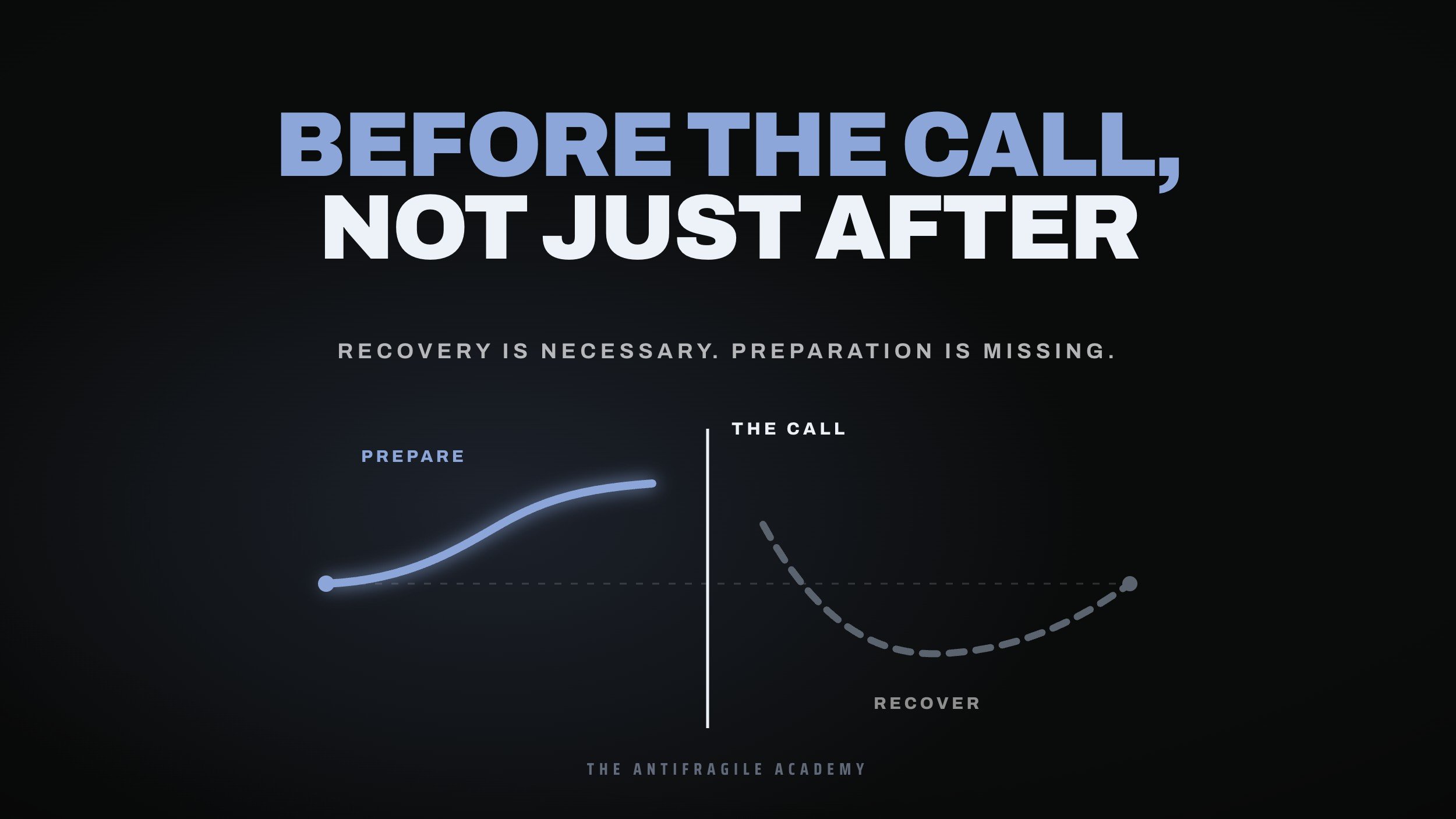
Resilience, defined precisely, is the capacity to return to baseline after adversity. Training built on it is therefore reactive by design: it equips people to bounce back once the stressor has already landed. In most departments I have worked with, that means skills and structures for after the incident, from stress management techniques to peer support and recovery routines.
None of that is wrong. For professions with guaranteed exposure to critical incidents, recovery capacity is non-negotiable, and I would never tell a department to dismantle it. The limitation is the frame itself: a program organized entirely around bouncing back treats the damage as the starting point. It trains the response and leaves the preparation to chance. For a population whose adversity is a certainty rather than a risk, that has always struck me as a strange place to leave it, and it is the gap I have spent the last five years working on.
Antifragility is proactive and preparatory: stressors are intentionally engaged, in advance and at a manageable dose, to strengthen
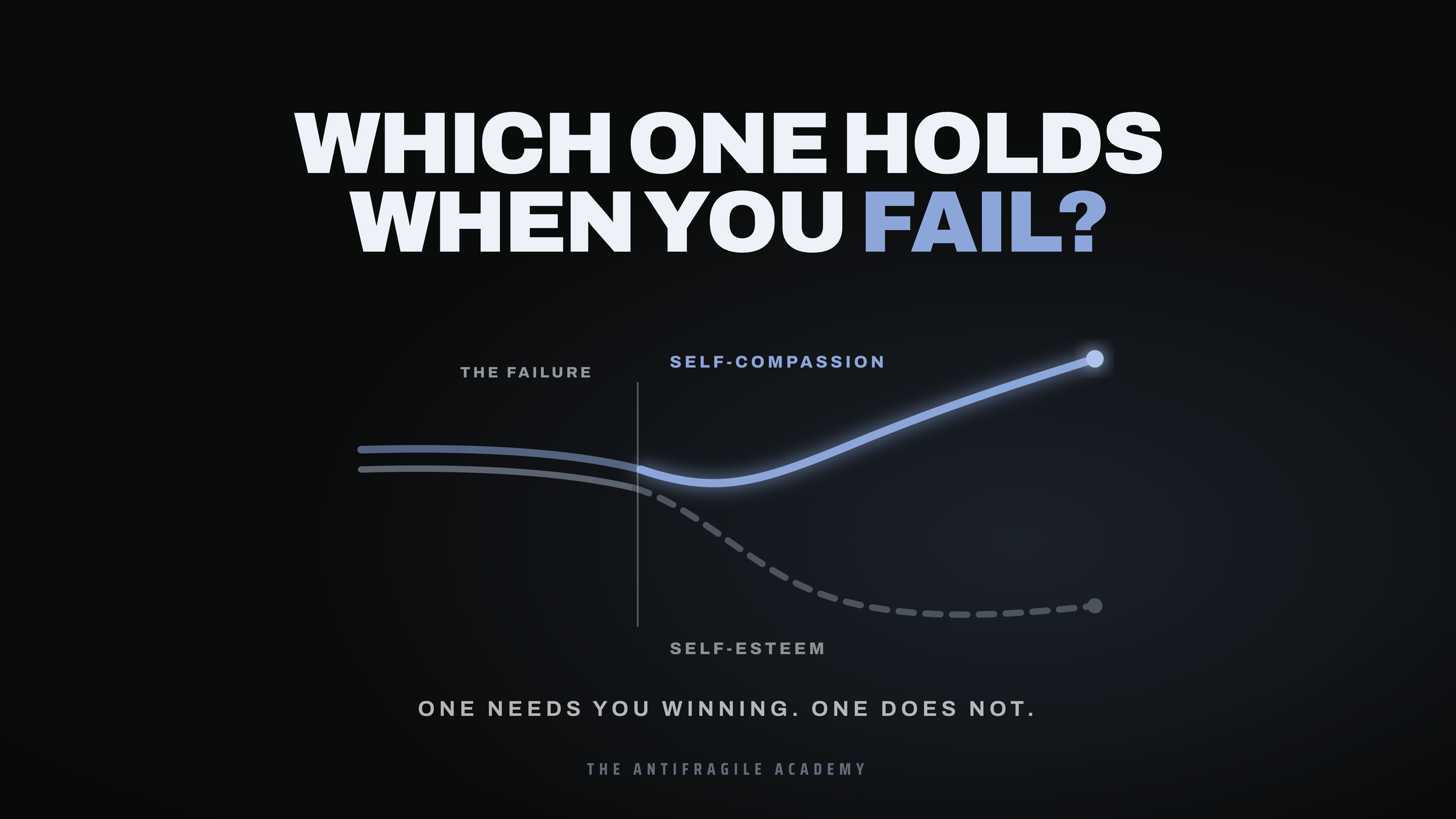
Self-Compassion vs Self-Esteem: Which One Holds Up When You Fail?
Self-esteem needs you to be doing well. It runs on favorable comparison, on being above average, on winning, so it is strongest exactly when you least need it and it thins out the moment you fail. Self-compassion does not require the comparison to go your way, which is why it is often still there after a bad result.
When it comes to handling failure, growing from it, and developing antifragility, does self-esteem or self-compassion help more? The short answer is self-compassion, but that leads us to another problem, which is that is also the one most high performers were never taught to use…
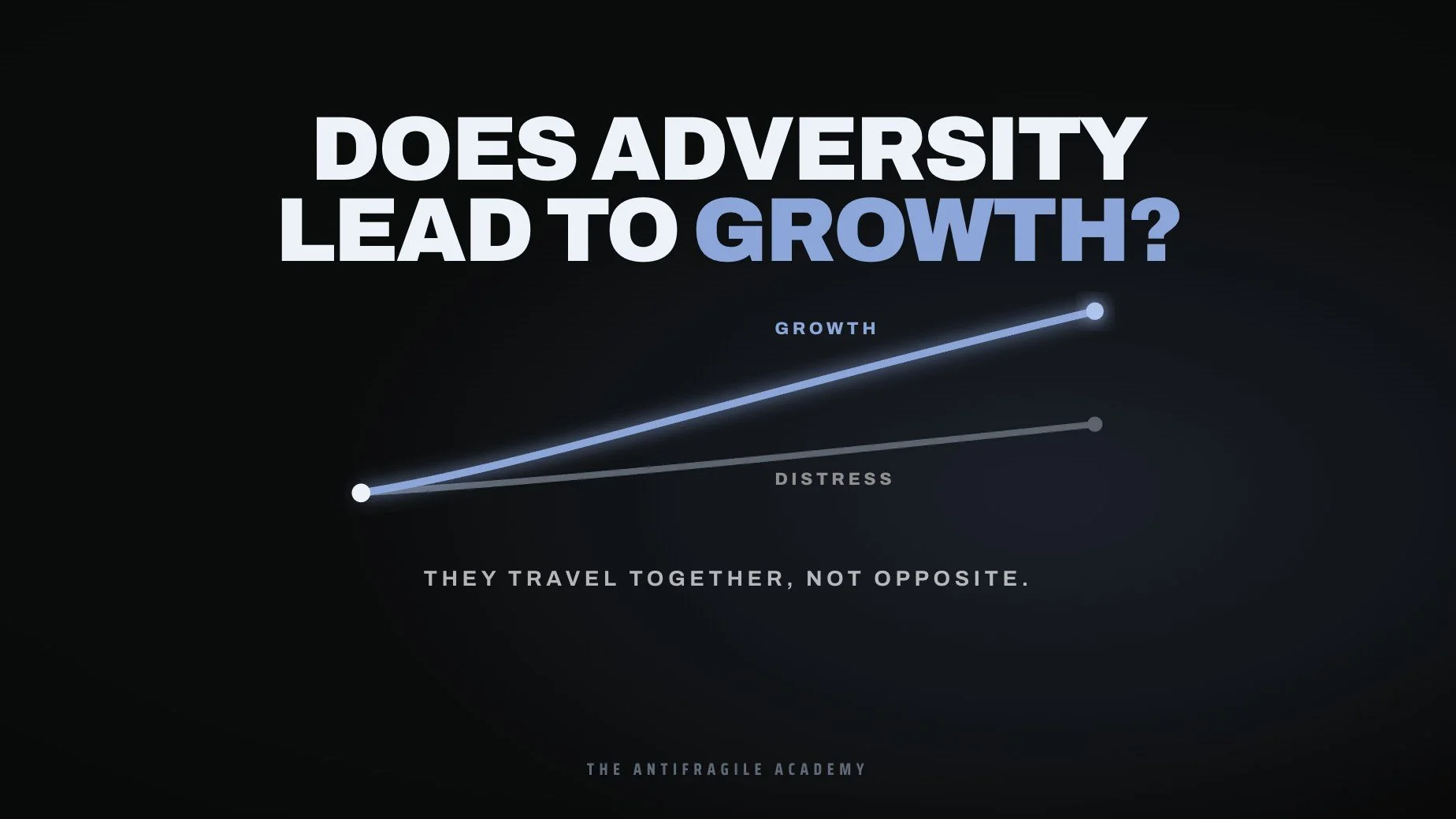
Does Adversity Lead to Growth?
Coming through something hard raises a quiet fear: does the pain mean growth is coming, or does it just mean damage. On current evidence the answer is that neither is tidy narrative. Post-traumatic distress and post-traumatic growth do not sit at opposite ends of one dial. They co-occur. Across large youth samples they correlate weakly positive rather than trading off, so the people hurting most and the people growing most are often the same people. That is not the same as saying adversity causes growth.
Adversity can lead to growth, but perhaps not in the simple way the posters promise. If suffering and growth were opposites, more of one would mean less of the other, and the correlation between them would be strongly negative. If adversity always led to growth, they’d have be strongly positively correlated. Instead a 2025 meta-analysis of youth reports…
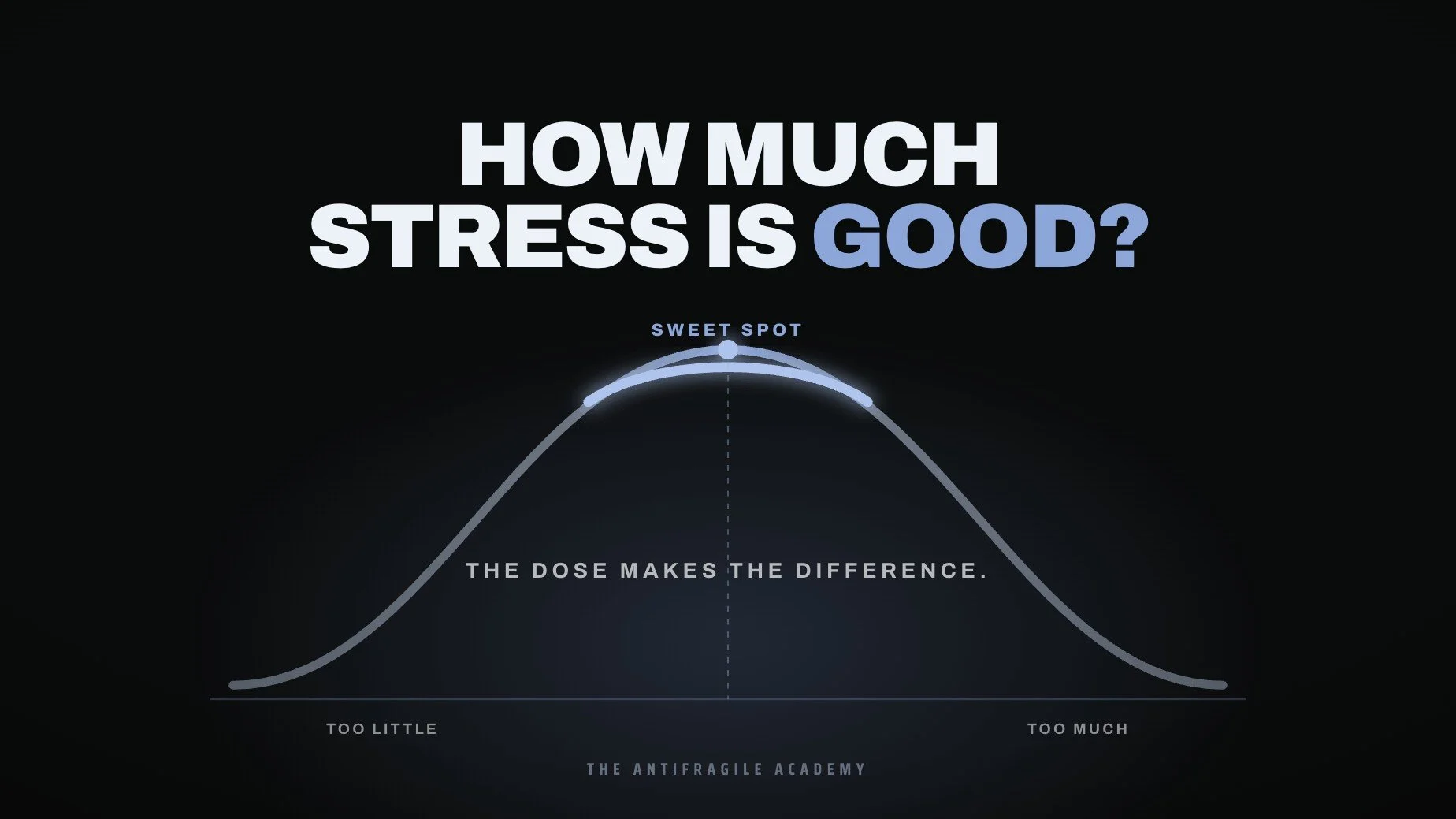
How Much Stress Is Good for You? The Dose Makes the Difference
A sprinter and a person stuck in traffic can show the same racing heart and the same cortisol spike. One is being built by the load. The other is being worn down by it. The difference is not whether stress is present. It is the dose, the structure around it, and whether the body reads the load as something it can meet.
So how much stress is good for us? Enough to force adaptation, not so much that it causes damage, delivered in a dose your current capacity can absorb, recover from and build upon.
Is Stress Good or Bad for You?
Neither, and the framing is the problem. Stress is a signal that something you care about is at stake. Whether it builds you or breaks you depends on the amount, the recovery around it, and how you frame it.
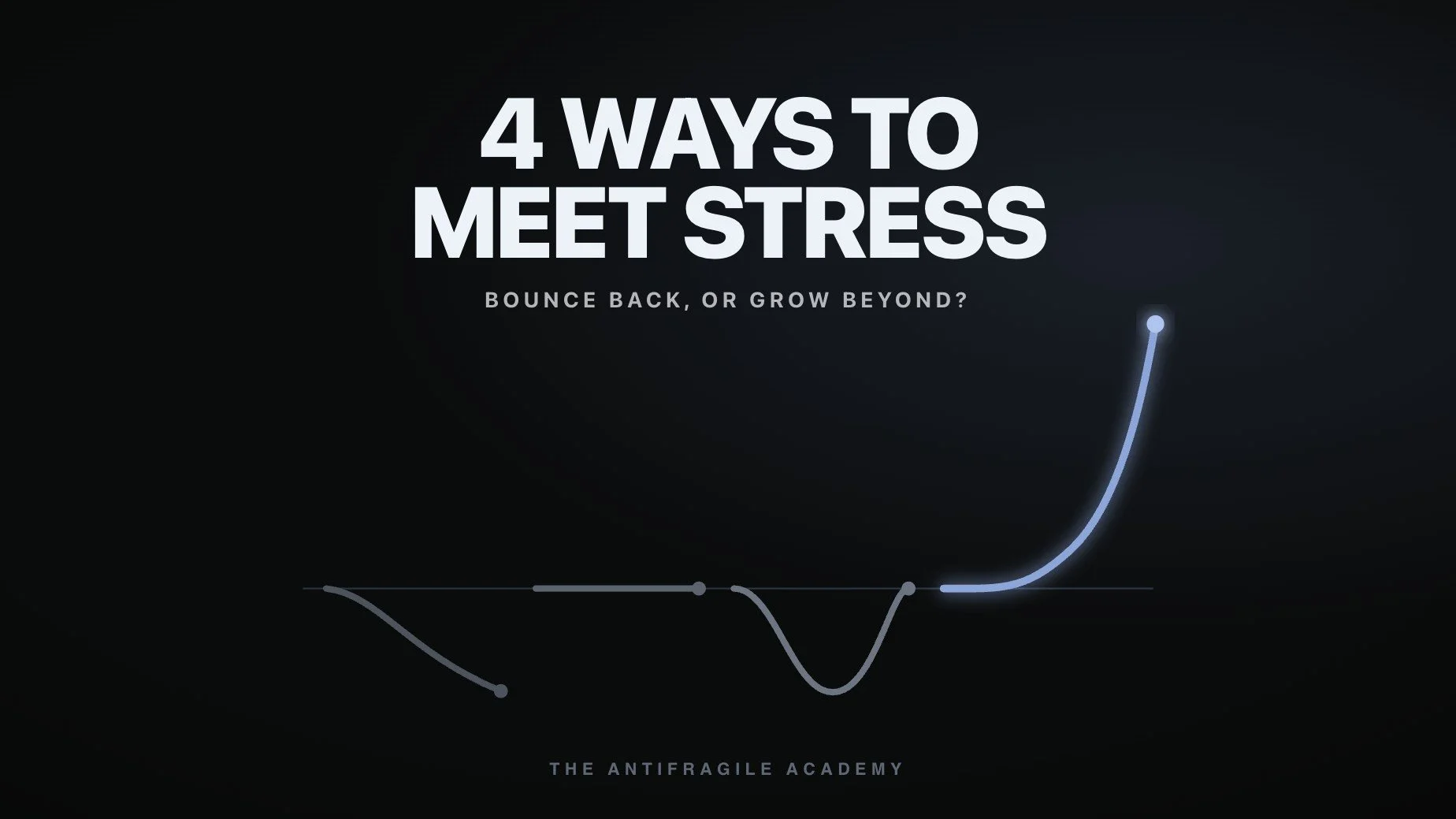
Resilience vs Antifragility vs Post-Traumatic Growth, Explained
People use robustness, resilience, antifragility, and post-traumatic growth as if they were the same idea dressed in different words. They are not. Each describes a different relationship to stress.
The short version: robustness resists stress and stays the same. Resilience absorbs stress and returns to baseline. Antifragility uses stress to get stronger, by design and in advance. Post-traumatic growth is positive change that emerges after a major trauma. Two of these recover. Two of these grow. They grow in different ways, at different times.
A Simple Map of the Four
Picture a single line that runs from "loses from stress" on the left to "gains from stress" on the right.
Antifragile vs Resilient: What's the Difference?
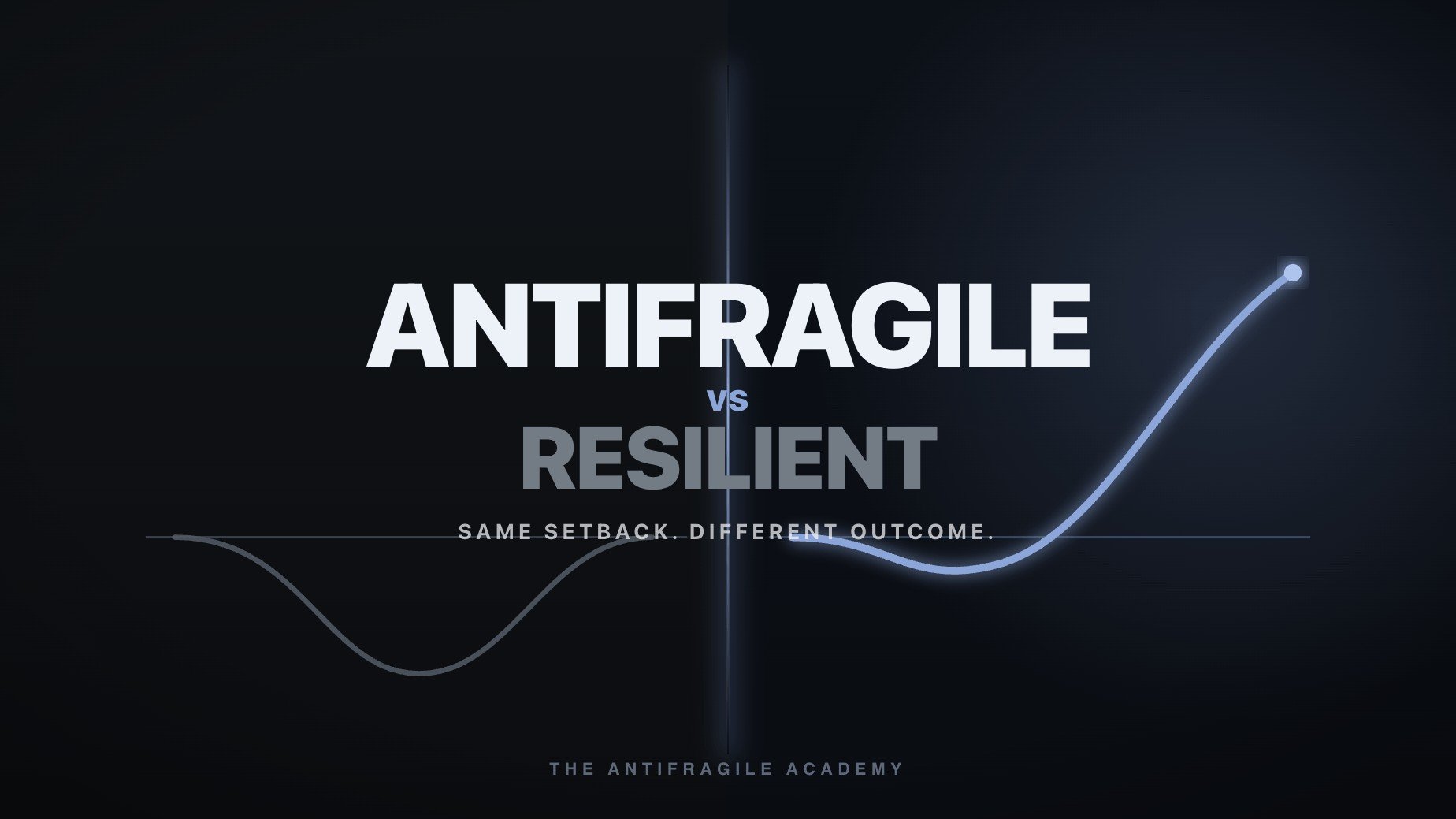
Two athletes tear the same ligament in the same week. A year later, one is back to exactly where she was. The other is measurably stronger than before the injury. The setbacks are similar, but how each athlete relates to it will make change everything.
That gap is the difference between resilience and antifragility. Resilience is the capacity to absorb a shock and return to baseline. Antifragility is the capacity to use the shock to improve, and even to lean into the shocks from time to time. Resilience recovers what was. Antifragility builds something better.
What Does Antifragility Really Mean?
The term comes from Nassim Nicholas Taleb, who argued that there was no word in common use for the opposite of fragile. Most people answer "resilient" or "robust," but those words only describe things that resist damage. They stay the same under stress. Taleb's point was that some things actually gain from stress, volatility, and disorder, and they needed their own category.
He laid it out as a spectrum…